
Back to Latest Briefings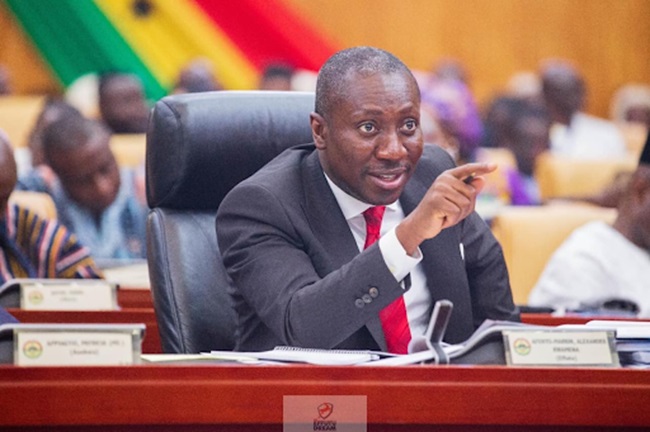


November 17, 2026
AI-Enhanced
A New Economy, Old Headaches and Afenyo’s Budget Fever!
Money
Policy
Opportunity
Growth
Key Points
- The Ghanaian Finance Minister presented a 'New Economy' budget, promising a $10 billion investment over four years for industrialisation, agriculture, energy, and technology.
- The Minority in Parliament, led by Alexander Afenyo-Markin, immediately questioned the legitimacy, financing, and originality of the 'New Economy,' suggesting it was a repackaged '24-Hour Economy.'
- Parliamentary debate also touched on the inconvenience of a late budget presentation conflicting with the idea of a 24-Hour Economy, and the unexplained absence of the promised Women's Bank.
- The article highlights a significant disconnect between government economic pronouncements and the lived realities of ordinary Ghanaians, who struggle with unemployment and inflation despite positive growth figures.
- It criticizes both the government for rhetorical policy announcements and the opposition for post-power scrutiny, emphasizing the need for concrete, impactful economic changes over political showmanship.
Why This Matters
This article critically examines Ghana's approach to economic policy, highlighting the recurring pattern of ambitious government announcements that often fail to translate into tangible improvements for ordinary citizens. It underscores the crucial need for policies that address real-world challenges like unemployment and cost of living, rather than remaining as abstract concepts or political talking points. The parliamentary scrutiny and public skepticism reflect broader concerns about governance, accountability, and the effective implementation of strategies for national development.
Read Full Article
View original sourceRelated Articles
November 18, 2026
Government urged to increase investment in TVET education
- The government has been urged to prioritize investment in Technical, Vocational Education and Training (TVET) to the same extent as STEM education.
- Dr. Kwabena Asubonteng of KNUST made this call at a zonal arts and culture program in Kumasi, which aimed to showcase student artistic abilities and promote cultural heritage.
- He emphasized the need for deliberate investments in TVET infrastructure, including school buses, well-equipped workshops, modern tools, laboratories, and studios.
- TVET education is highlighted for providing practical skills, fostering employment, entrepreneurship, and self-reliance, and parents are encouraged to support their children in pursuing it.
- The Ashanti Regional Director of TVET Service, Mr. Richard Addo Gyamfi, urged students to use their creative talents to generate economic opportunities and build sustainable careers, linking TVET to creativity, innovation, and cultural preservation.
November 18, 2026
Alcaraz continues winning run despite injury concern
- Carlos Alcaraz defeated Daniil Medvedev 6-2 6-4 to advance to the ATP Finals knockout stage, despite a minor hamstring issue.
- This marks Alcaraz's 11th consecutive victory, building on recent titles at the Vienna Open and Paris Masters.
- Frances Tiafoe also secured a win against Flavio Cobolli, keeping his semi-final aspirations alive and setting up a crucial match against Medvedev.
- Alcaraz's performance against Medvedev was rated 9.5 out of 10 by the ATP, highlighting his dominant form since returning from injury.
- In the doubles tournament, Briton Neal Skupski and American Christian Harrison bounced back with a win over Italian opponents.
November 18, 2026
Acheampong inherited housing, agriculture plans – Bomfeh
- Dr. James Kwabena Bomfeh challenges the sole attribution of major development projects, like Dansoman housing estate, to General Acheampong's regime.
- He argues that these initiatives were conceived and built upon policies established by earlier governments, particularly the First Republic.
- Bomfeh cited pre-existing large-scale estate developments and agricultural policy foundations as evidence of prior blueprints.
- He emphasizes the importance of tracing the origins of projects to provide a complete and accurate account of Ghana's political and economic history.
- The lecturer warned against using projects undertaken by military regimes to justify unconstitutional overthrows, highlighting their cost to democratic governance and institutional development.